Skip to content


Spring in Japan is one of the most enchanting times to visit. Cherry blossoms bloom across parks, streets, and temple grounds, creating a dreamy backdrop for travel photos, slow walks, and memorable sightseeing days. But while the scenery feels soft and romantic, the weather can be surprisingly practical to dress for. Morning temperatures can feel cool, afternoons may warm up, and a sudden breeze or light rain can change how an outfit feels within minutes.
That is why the best Japan spring outfits are not just stylish — they are strategic. The ideal wardrobe for this season should help you stay comfortable while moving between trains, streets, parks, cafés, and cultural landmarks. It should also give you a cohesive look for photos without overstuffing your suitcase. Whether you are heading to Tokyo, Kyoto, Osaka, or smaller cherry blossom destinations, a thoughtful capsule wardrobe will make your trip easier and more enjoyable.
This guide covers the best Japan spring outfit ideas, what fabrics and colors work well, how to layer for changing temperatures, and how to build a versatile travel wardrobe that looks polished from morning to evening.
Contents
- 1 What Spring Weather Is Like in Japan
- 2 Best Fabrics for Japan Spring Outfits
- 3 Outfit Idea 1: Trench Coat and Jeans
- 4 Outfit Idea 2: Midi Dress and Cardigan
- 5 Outfit Idea 3: Wide-Leg Trousers and a Blouse
- 6 Outfit Idea 4: Skirt and Knit Top
- 7 Outfit Idea 5: Jeans and a Soft Blouse
- 8 Best Shoes for Japan in Spring
- 9 Best Colors for Cherry Blossom Season
- 10 Spring Packing Essentials
- 11 How to Build a Capsule Wardrobe
- 12 FAQs on Japan Spring Outfit Ideas
- 12.1 How many outfits do I actually need for two weeks in Japan?
- 12.2 Can I wear leggings or athleisure?
- 12.3 What’s the best color palette?
- 12.4 Do I need to pack anything formal?
- 12.5 Should I just buy clothes when I get there?
- 12.6 What if I’m visiting Mount Fuji or doing any hiking?
- 12.7 Are there dress codes at temples and shrines?
- 12.8 How do I actually fit 15 pieces in a carry-on?
- 13 Final Recommendations
What Spring Weather Is Like in Japan
Spring weather in Japan is often mild, but it can shift quickly depending on the time of day and the region you are visiting. Early spring can still feel cool, especially in the mornings and evenings, while midday often becomes more comfortable. Because of this, one of the smartest ways to dress is by layering.
You may start the day with a light jacket and end it in just a top and trousers. In some areas, especially near the coast or in cities with more wind, the temperature can feel cooler than expected. A light scarf, cardigan, or trench coat can make a big difference when you are outside for long stretches of time.
If you are traveling during cherry blossom season, you will also want outfits that work well in crowded, photo-heavy environments. That means clothing should feel easy to move in, look clean and timeless, and hold up well during a full day of walking, taking photos, and hopping between attractions.
Best Fabrics for Japan Spring Outfits
When packing for spring in Japan, fabric choice matters as much as style. Breathable, lightweight materials are ideal because they keep you comfortable when temperatures rise. Cotton, linen blends, soft knits, and lightweight wool are all strong choices for this season.
Avoid heavy, bulky pieces that take up too much space or feel too warm once the sun comes out. Instead, choose layers that you can easily remove or add as needed. A cotton tee under a cardigan, a blouse under a blazer, or a dress with a light jacket can all work well in a spring travel wardrobe.
If you walk a lot, choose fabrics that do not wrinkle too quickly and do not feel stiff after hours of wear. Comfort is key, especially if your itinerary includes temple visits, train transfers, garden strolls, and long city days.
Outfit Idea 1: Trench Coat and Jeans

A trench coat paired with jeans is one of the easiest and most timeless Japan spring outfits. It feels polished without being fussy, and it transitions beautifully from cool mornings to warmer afternoons. Straight-leg jeans or relaxed denim keep the look casual and practical, while a trench coat adds structure and style.
Underneath, keep things simple with a fitted tee, a lightweight sweater, or a crisp blouse. This allows you to layer comfortably without looking bulky. Finish the outfit with white sneakers or neutral walking shoes so you can stay on your feet all day.
This look is especially helpful if you want one outfit that can work for sightseeing, lunch, and evening plans without needing a full change.
Outfit Idea 2: Midi Dress and Cardigan

If you want something softer and more feminine, a midi dress with a cardigan is a beautiful spring choice. This outfit works especially well for cherry blossom photos because it feels graceful and seasonal without looking overstyled. A dress with a relaxed silhouette gives you movement and comfort, which is helpful for walking and sitting throughout the day.
A cardigan adds warmth without making the outfit feel too heavy. You can also swap it for a light cropped jacket or denim layer depending on your style. If you prefer more coverage, choose a long-sleeve midi dress in a breathable fabric.
Pair this outfit with low-profile sneakers, ballet flats, or comfortable loafers depending on how much walking you expect to do. The balance of ease and elegance makes this one of the most versatile spring outfit ideas for Japan.
Outfit Idea 3: Wide-Leg Trousers and a Blouse

Wide-leg trousers are ideal for travelers who want comfort and refinement in one outfit. They move easily, look modern, and pair well with almost any top. When combined with a blouse, this outfit feels airy enough for spring while still looking polished for photos or dinner.
Choose trousers in a neutral color like beige, navy, black, or soft grey so they can mix with multiple tops. A tucked-in blouse, shell top, or fine knit keeps the silhouette clean and flattering. Add a light blazer or cardigan if the weather feels cooler than expected.
This is a great outfit for urban sightseeing, museum visits, and any day when you want to look a little more dressed up without sacrificing comfort.
Outfit Idea 4: Skirt and Knit Top
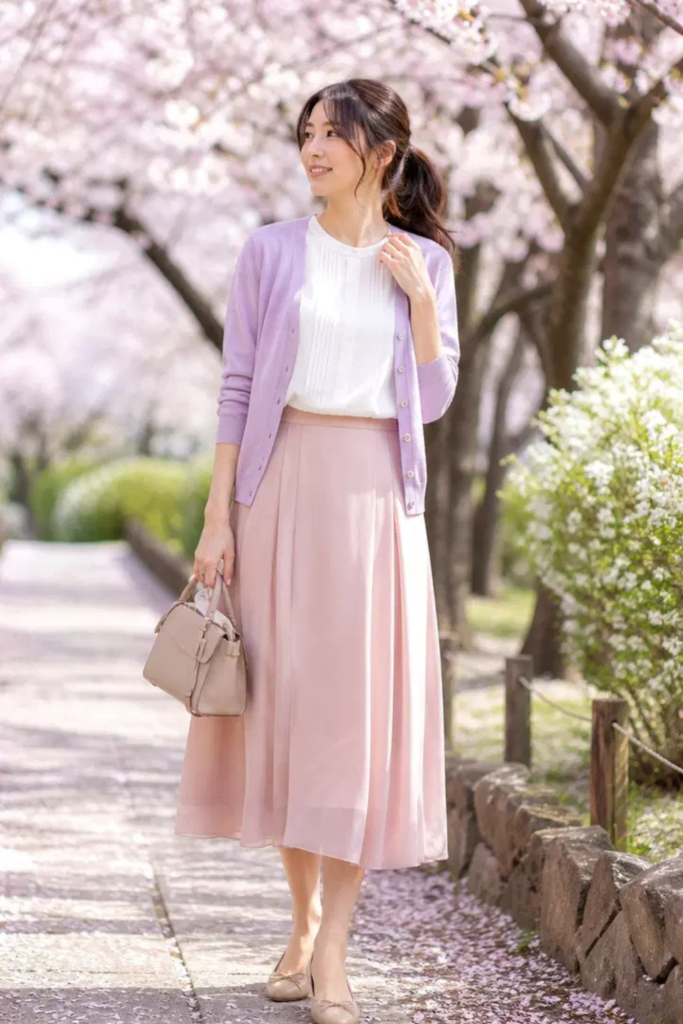
A skirt and knit top combination creates a beautiful spring balance. A pleated skirt, A-line skirt, or midi skirt can bring a soft, romantic feel to your travel wardrobe, especially if you are planning blossom photos or garden visits. Pairing it with a fitted knit top keeps the look grounded and wearable.
The best way to style this outfit is to keep proportions balanced. If the skirt is flowy, choose a more fitted top. If the top is slightly looser, make sure the skirt has structure. Add a light jacket, scarf, or cardigan for warmth and dimension.
This outfit works especially well in pastel or neutral tones. Soft blush, cream, sage, dusty blue, and taupe all feel right at home in Japan during spring.
Outfit Idea 5: Jeans and a Soft Blouse

Sometimes the best travel outfits are the simplest ones. Jeans and a soft blouse are easy to wear, easy to repeat, and easy to style with different layers. This combination is perfect for days when you want comfort first but still want to look put together.
A blouse with a relaxed sleeve, subtle print, or delicate texture can make the outfit feel more elevated than a basic tee. Add a light jacket or cardigan if needed, then finish with comfortable sneakers and a crossbody bag.
This is one of the most practical looks for busy travel days because it works across different settings and lets you focus on the experience rather than your outfit.
Best Shoes for Japan in Spring

Shoes matter more than almost anything else when planning a Japan trip. You will likely walk more than usual, often across stations, sidewalks, temple grounds, and park paths. For that reason, supportive shoes should be your priority.
White sneakers are a favorite because they work with almost every outfit and keep the overall look fresh. Loafers, comfortable flats, and low-profile walking shoes are also good options if they support your feet well. If you prefer a dressier look, choose a shoe that still has enough cushioning for several hours of walking.
Avoid brand-new shoes that have not been broken in yet. Even the cutest outfit can become uncomfortable fast if your feet are sore halfway through the day.
Best Colors for Cherry Blossom Season
Spring in Japan naturally inspires softer color palettes. Pastels, creams, whites, muted greens, dusty blues, blush, and light beige all photograph beautifully against cherry blossom scenery. These colors also create a calm, cohesive look across your travel photos.
That does not mean you have to avoid darker colors completely. Black, navy, and charcoal can work very well if you lighten them with soft accessories or spring layers. A well-balanced wardrobe with both neutrals and a few seasonal tones gives you flexibility while keeping your outfits visually harmonious.
If you enjoy minimal style, a neutral palette can look especially elegant in Japan. If you prefer a more romantic feel, adding one or two blush or pastel pieces can make your outfits feel more seasonal without going overboard.
Spring Packing Essentials

A good Japan spring capsule wardrobe does not need to be large. The key is selecting pieces that can be mixed and matched into multiple outfits. This makes packing lighter and gives you more outfit options without extra weight.
Here is a simple packing formula:
- 3 to 5 tops.
- 2 to 3 bottoms.
- 1 dress or skirt.
- 1 cardigan or sweater.
- 1 light jacket or trench coat.
- 1 pair of comfortable walking shoes.
- 1 pair of backup shoes, if needed.
- A scarf, compact umbrella, and crossbody bag.
You can adapt this list based on your travel style, but the overall goal should stay the same: comfortable, versatile, and photo-friendly pieces that work together.
How to Build a Capsule Wardrobe
A capsule wardrobe makes Japan spring dressing much easier. Start by choosing a color palette first, then select clothing pieces that can be worn in multiple combinations. For example, a cream blouse can work with jeans, trousers, and a skirt. A trench coat can layer over dresses, denim, or tailored pants. A cardigan can add warmth to almost any base outfit.
The more your pieces coordinate, the easier it becomes to get ready in the morning. You also save space in your suitcase and reduce decision fatigue while traveling. That is especially helpful if you plan to move between cities or stay in Japan for more than a few days.
A strong capsule wardrobe also makes your travel photos look more intentional. When your outfits share a cohesive palette and similar styling mood, the whole trip feels visually polished.
FAQs on Japan Spring Outfit Ideas

How many outfits do I actually need for two weeks in Japan?
Less than you think. With 5–7 solid combinations and access to coin laundry — which is cheap, easy, and genuinely everywhere in Japan — a 15-piece capsule will take you the full two weeks without repeating yourself in any obvious way.
Can I wear leggings or athleisure?
Absolutely, for most of your trip. Cities and casual sightseeing days are totally fine. Just dress it up slightly for temple visits or sit-down dinners — leggings paired with a longer tunic or flowy dress read as put-together rather than gym-bound.
What’s the best color palette?
Build your base in neutrals — black, white, navy, tan, or grey — then add one or two soft spring tones like blush, sage, or dusty blue. The practical upside: everything mixes and matches. The aesthetic upside: you’ll look effortlessly coordinated in every cherry blossom photo.
Do I need to pack anything formal?
Almost certainly not. Even nicer restaurants in Japan are fine with smart-casual. A blouse with tailored trousers or a simple dress handles the dressiest situations most tourists will encounter.
Should I just buy clothes when I get there?
Leave a little room in your bag for it. Japan’s shopping — especially Uniqlo and local basics — is genuinely excellent: well-made, reasonably priced, and often better than what you’d pack from home. Plenty of travelers pick up a piece or two on arrival and fill wardrobe gaps as they go.
What if I’m visiting Mount Fuji or doing any hiking?
The capsule above is built for city and cultural travel. If you’re heading into mountainous or rural areas, add a pair of light trail shoes and a moisture-wicking base layer or two.
Are there dress codes at temples and shrines?
Japan is far more relaxed about this than many other countries in Asia. There’s no standard requirement to cover shoulders or knees at most temples and shrines, though dressing modestly and respectfully is always a good call.
How do I actually fit 15 pieces in a carry-on?
Roll everything instead of folding — it saves more space than you’d expect. Use packing cubes to compress and organize by category. Wear your bulkiest pieces (your jacket, your chunkiest shoes) on travel days. Tuck lightweight items into gaps at the end.
Final Recommendations
The honest version, after thinking through a lot of these capsules:
For the best all-around foundation: A packable jacket, two versatile pairs of pants, a wrap dress, four neutral tees, and a cardigan. Add great walking shoes. Every other piece in your bag exists to support these.
On a tight budget: Amazon Essentials does the job — the T-shirt multipack and chino pants offer real quality for the price. One solid pair of walking shoes and you’re genuinely set.
If you’re only splurging on one thing: Make it footwear. And while you’re at it, grab Darn Tough socks. By day ten, when your travel companions are wincing through every cobblestone street, you’ll understand exactly why they’re worth it.