Skip to content

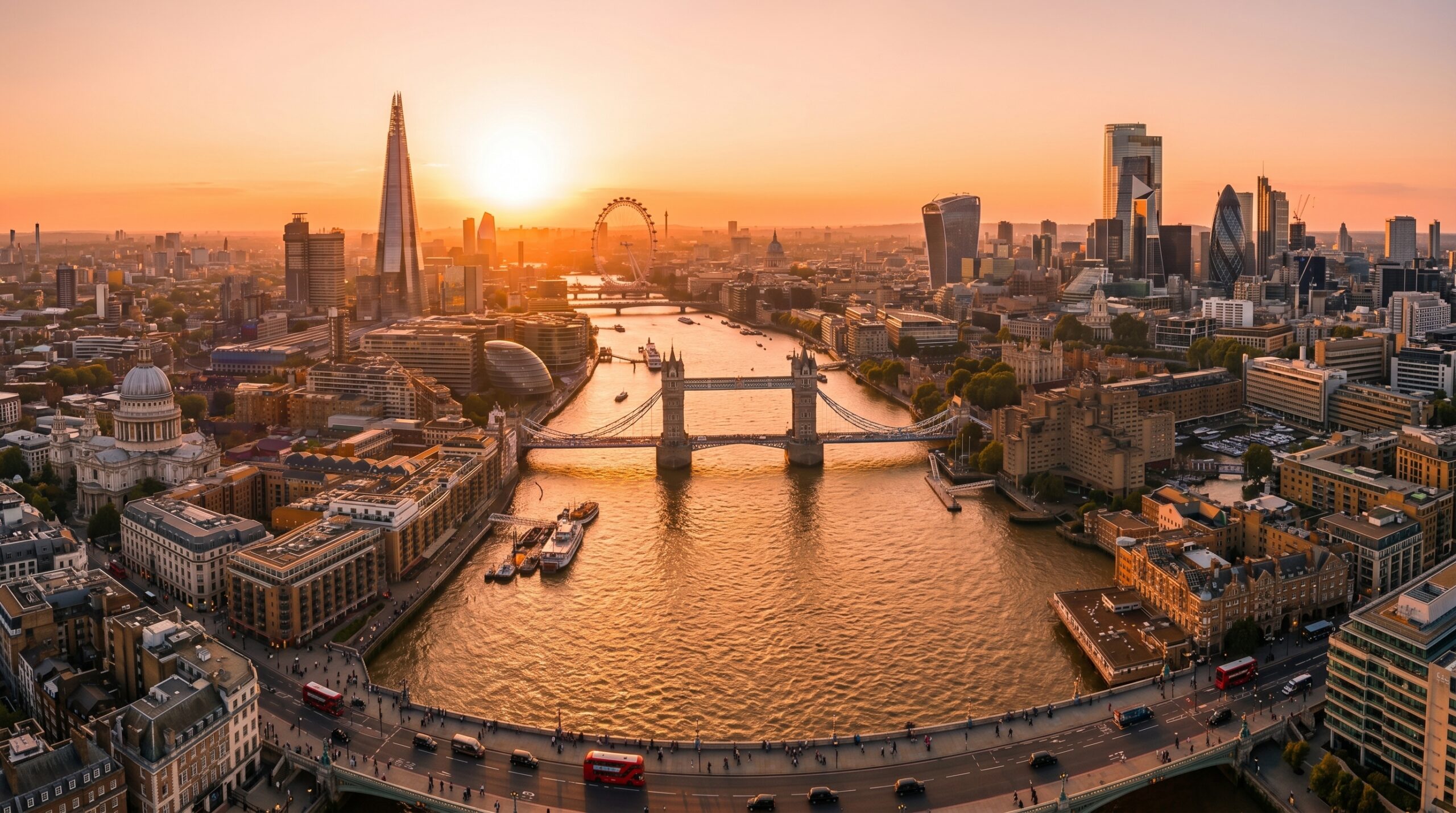
London keeps catching you off guard. One minute you’re on a perfectly ordinary street, the next you’ve stumbled into a courtyard that hasn’t changed much since the 1600s. The skyline alone is worth staring at — medieval towers poking up next to glass skyscrapers, which shouldn’t work but somehow does. Whether you’re actually going or just planning a trip in your head, here are 15 London bucket list places worth putting on your list
Contents
- 1 15 Best Places to Visit in London
- 1.1 1. The Tower of London
- 1.2 2. Buckingham Palace
- 1.3 3. The British Museum
- 1.4 4. Tower Bridge
- 1.5 5. The London Eye
- 1.6 6. Hyde Park
- 1.7 7. Covent Garden
- 1.8 8. The National Gallery
- 1.9 9. Trafalgar Square
- 1.10 10. Borough Market
- 1.11 11. St. Paul’s Cathedral
- 1.12 12. Notting Hill
- 1.13 13. Greenwich & the Royal Observatory
- 1.14 14. Sky Garden
- 1.15 15. Kew Gardens
- 2 London Bucket List: Practical Tips Before You Go
- 3 How to Book Hotels and Flights for Your London Trip
- 4 How to Create a Budget-Friendly London Travel Itinerary
- 5 Frequently Asked Questions About Visiting London
- 5.1 How many days do I need to experience a proper London bucket list?
- 5.2 What are the best free things to do on a London bucket list in 2026?
- 5.3 What is the best time of year for London bucket list experiences?
- 5.4 Is London easy to navigate for first-time visitors?
- 5.5 What should I include in a first-time London travel itinerary?
- 5.6 How do I get around London on a budget?
15 Best Places to Visit in London
1. The Tower of London
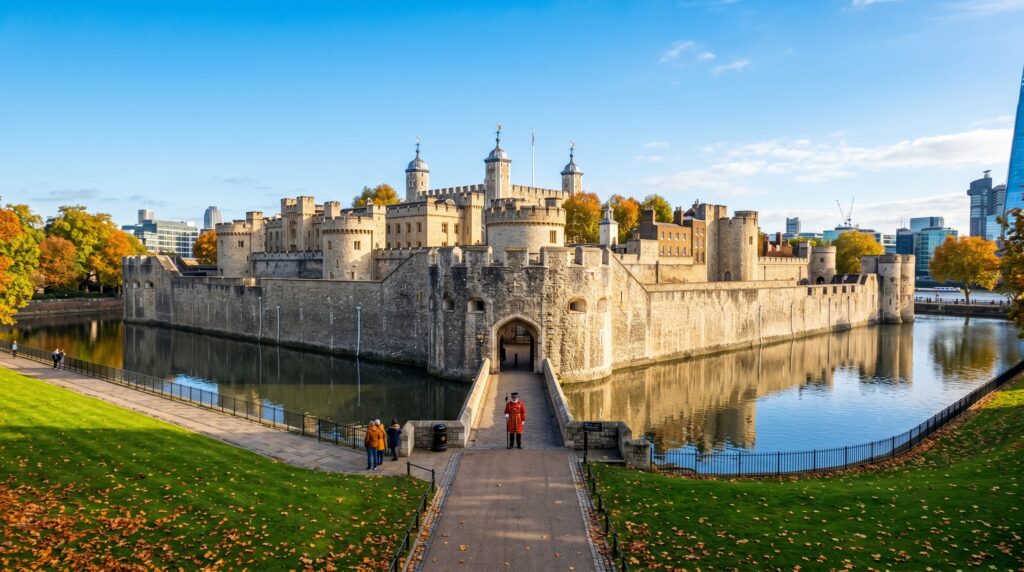
Few places carry as much history per square metre as the Tower of London. Founded by William the Conqueror in 1066, this fortress has served as a royal palace, a prison, and even a zoo over the centuries. Today, visitors come to marvel at the glittering Crown Jewels and meet the legendary resident ravens — whose presence, according to superstition, keeps the kingdom standing.
2. Buckingham Palace
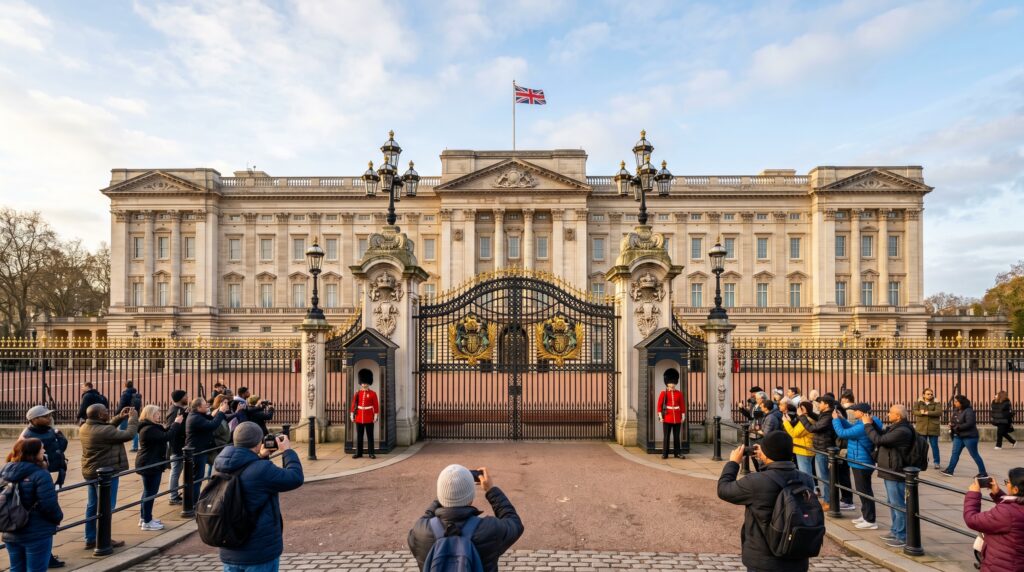
No London trip is complete without standing at the gates of Buckingham Palace. The iconic Changing of the Guard ceremony draws crowds daily, offering a front-row seat to a centuries-old royal tradition. Even if you don’t get a royal wave, the grandeur of the palace façade and the surrounding St. James’s Park make it well worth the visit.
3. The British Museum

Walk through the entire span of human civilisation for free. The British Museum houses over eight million artefacts, including the Rosetta Stone and the Elgin Marbles, collected from cultures across every continent. Plan at least half a day here; you will not see everything, and that is perfectly okay.
4. Tower Bridge
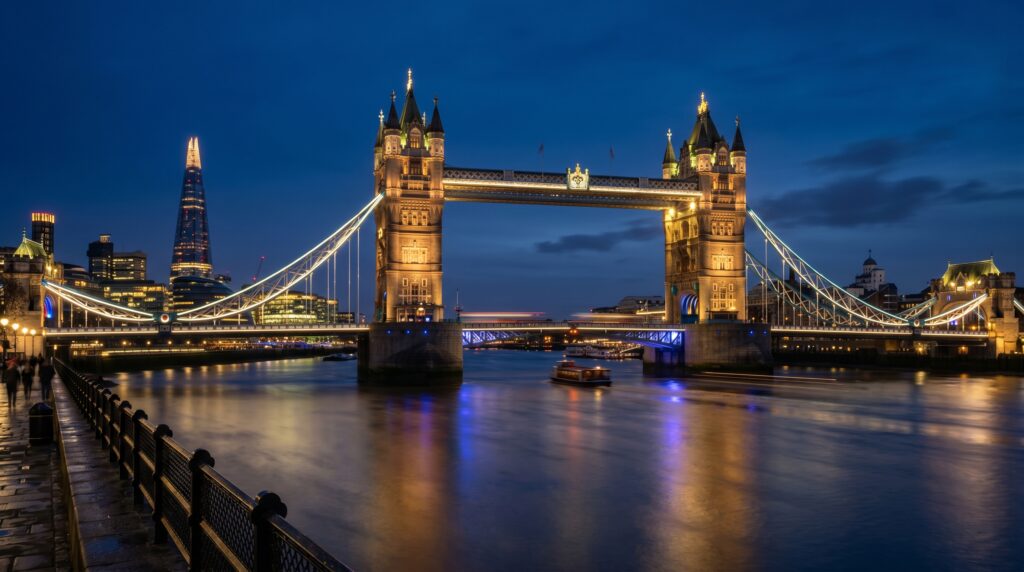
Tower Bridge is one of the most photographed structures on Earth — and once you see it in person, you’ll understand why. Built between 1886 and 1894, this Victorian engineering marvel still opens to allow tall ships through the River Thames. Cross the glass-floored walkway at the top for views that will genuinely take your breath away.
5. The London Eye
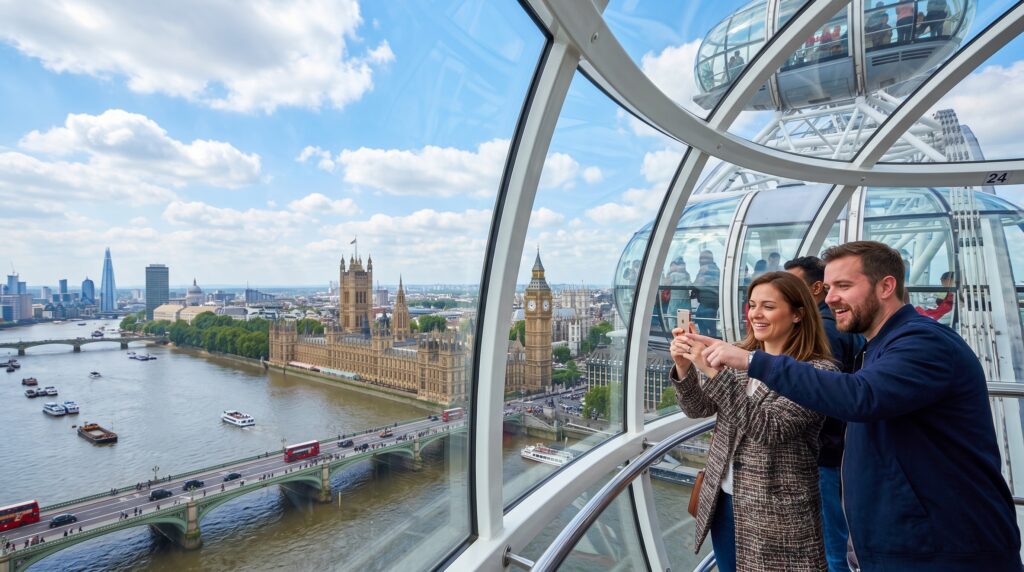
Perched on the South Bank of the Thames, the London Eye offers a slow, 30-minute rotation that reveals the city from an entirely new perspective. On a clear day, you can see as far as Windsor Castle, 40 kilometres away. Book your capsule in advance, especially during peak season, to skip the queues.
6. Hyde Park
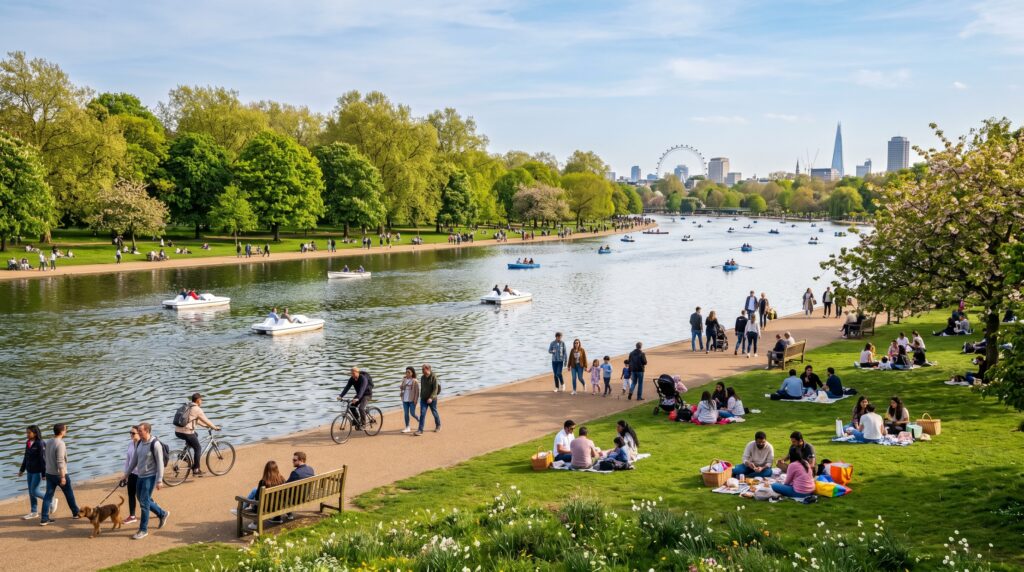
When the pace of London starts to feel overwhelming, Hyde Park is your reset button. Spanning 350 acres, this Royal Park is home to the Serpentine Lake, Speaker’s Corner (where anyone can stand up and address the public), and the moving Diana Memorial Fountain. Rent a paddleboat, pack a picnic, and stay for the afternoon.
7. Covent Garden
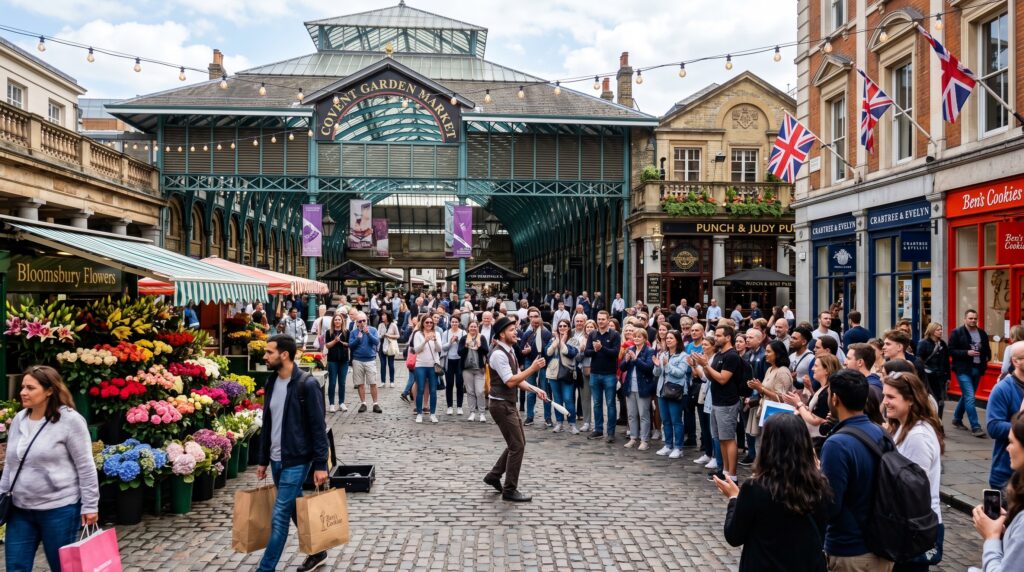
Covent Garden is where London’s creative energy spills out onto the streets. Street performers, independent boutiques, rooftop bars, and some of the city’s best people-watching all converge in this lively piazza. The covered market hall dates back to 1670 and is still one of the most atmospheric shopping experiences in the city.
8. The National Gallery
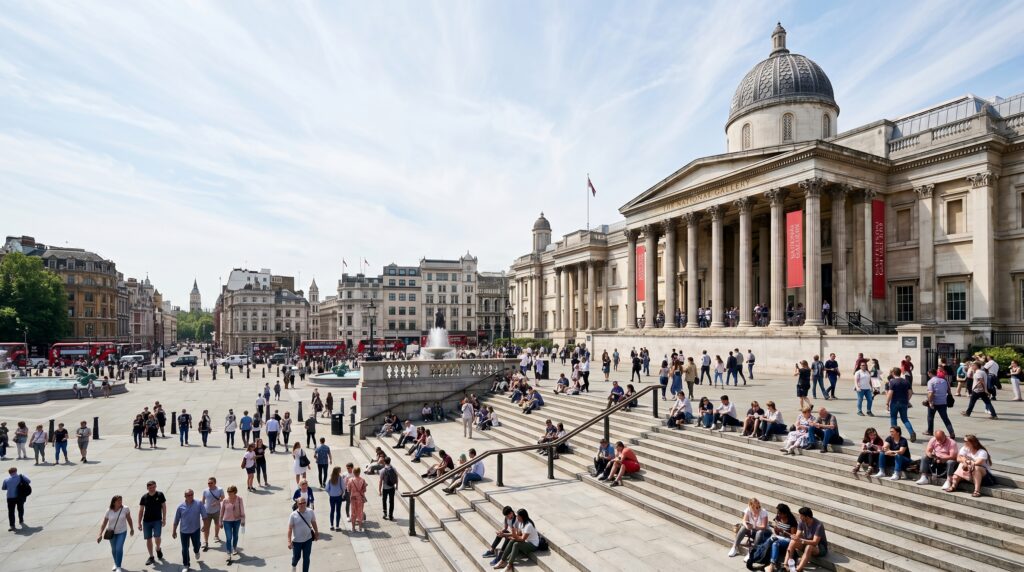
Overlooking Trafalgar Square, the National Gallery is home to over 2,300 paintings spanning seven centuries of European art. From Van Gogh’s Sunflowers to Monet’s water lilies and Botticelli’s portraits, the collection reads like a greatest-hits album of Western art history. Best of all, entry is completely free.
9. Trafalgar Square
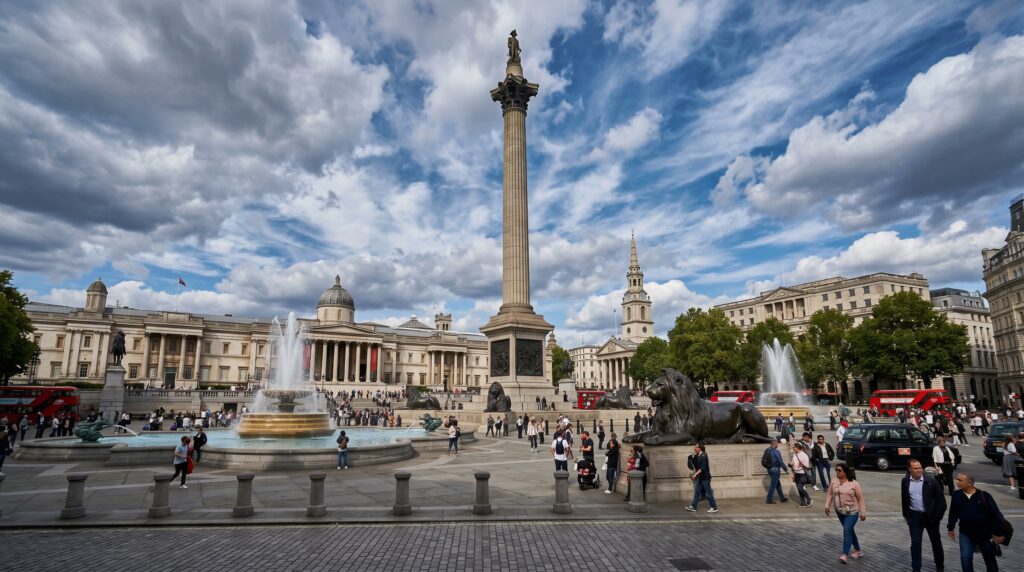
At the heart of central London, Trafalgar Square is more than just a transport hub — it’s the city’s living room. Nelson’s Column towers over the square while four lion sculptures guard its base, and the fountains provide a cooling backdrop in summer. Major events, protests, and New Year’s Eve celebrations all find a home here.
10. Borough Market
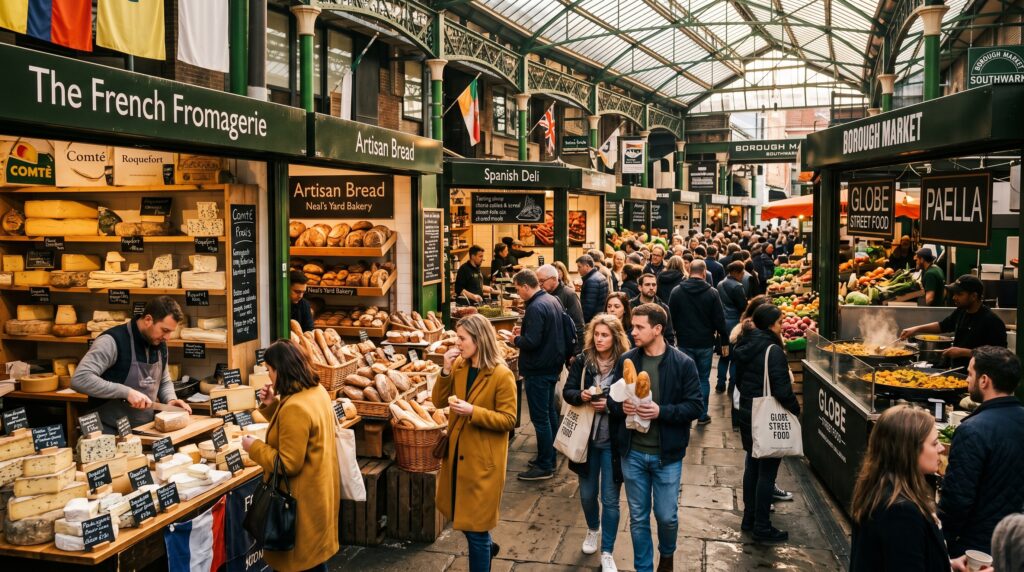
If food is your love language, Borough Market is your holy ground. One of London’s oldest and most celebrated food markets, it has been trading for over 1,000 years and now hosts over 100 stalls selling artisan cheeses, fresh bread, street food from every culture, and imported delicacies. Come hungry — and bring cash.
11. St. Paul’s Cathedral
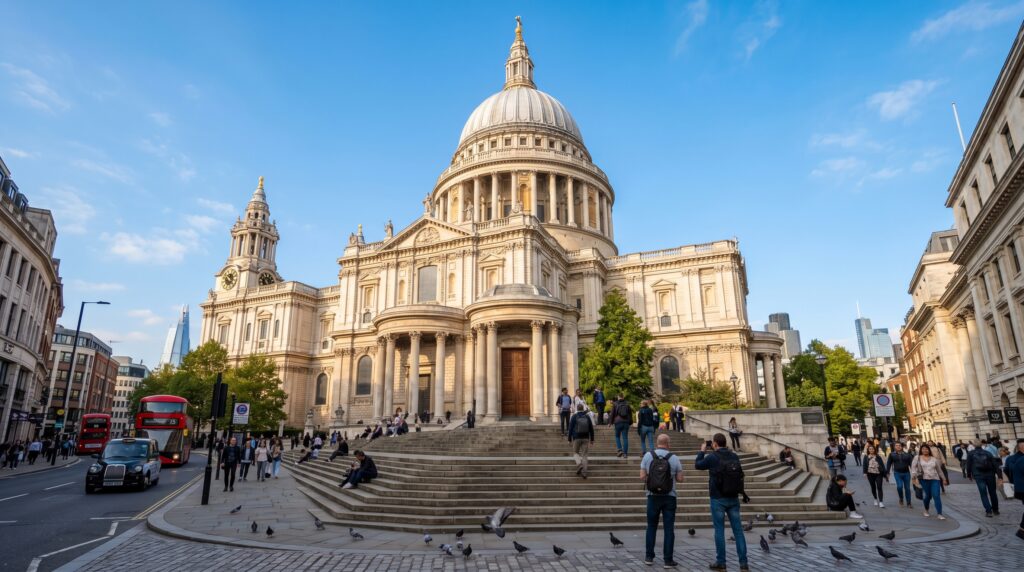
Designed by Sir Christopher Wren and completed in 1710, St. Paul’s Cathedral is one of the most awe inspiring buildings in all of Europe. Climb the Whispering Gallery inside the dome and discover why even a soft whisper carries all the way around its curved walls. The views from the Golden Gallery at the very top are absolutely spectacular.
12. Notting Hill
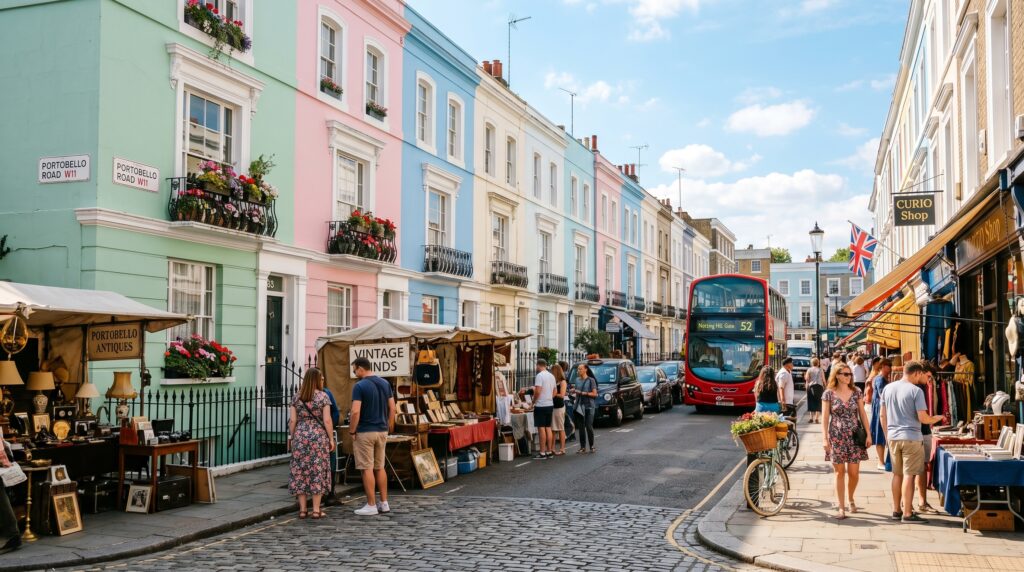
Beyond the Hugh Grant film, Notting Hill is a genuinely charming neighbourhood worth exploring on foot. Portobello Road Market — stretching over a kilometre — is a treasure trove of antiques, vintage clothing, and fresh produce. The pastel-coloured townhouses make it one of the most photogenic streets in all of London.
13. Greenwich & the Royal Observatory
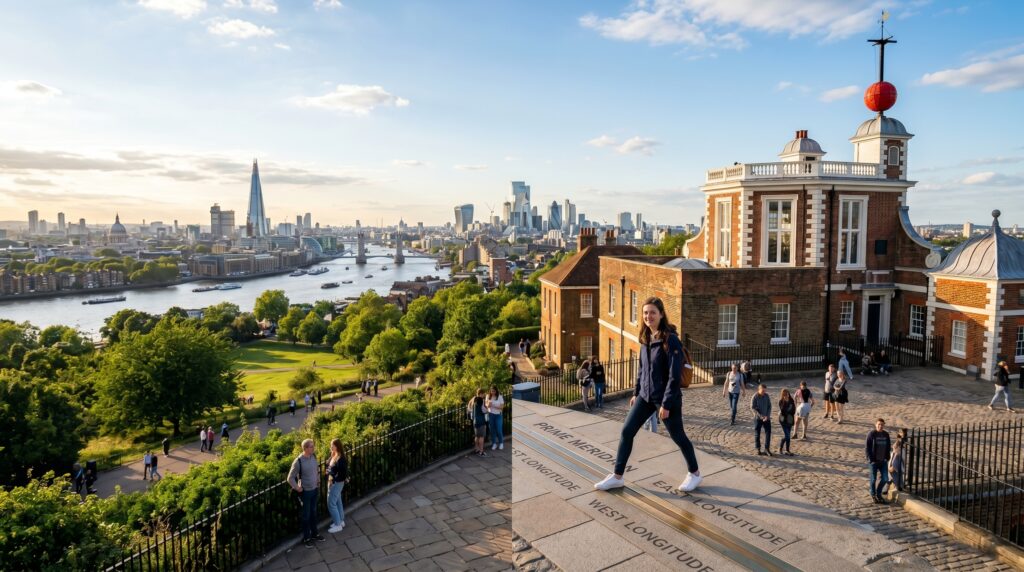
Step across the Prime Meridian — literally — at the Royal Observatory in Greenwich. This hilltop landmark is where longitude zero is marked on the ground, and visitors can straddle the line between the Eastern and Western hemispheres. The sweeping views of the London skyline from the hill are among the best the city has to offer.
14. Sky Garden
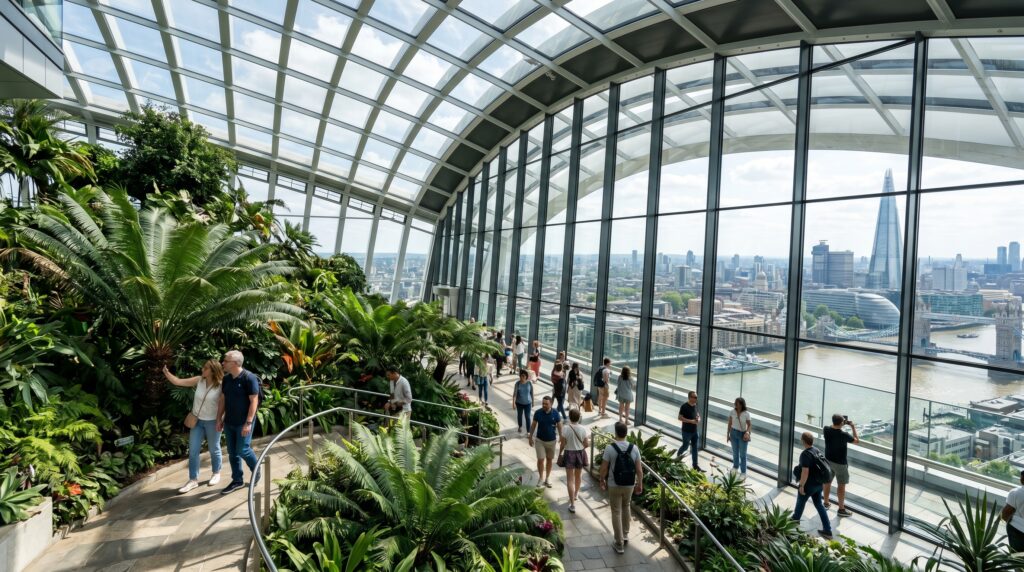
For free panoramic views over London without the Eye’s price tag, head to the Sky Garden. Perched on the 35th floor of 20 Fenchurch Street (affectionately nicknamed the “Walkie Talkie”), this lush indoor garden offers jaw-dropping 360-degree views. Booking ahead is essential — slots fill up quickly.
15. Kew Gardens
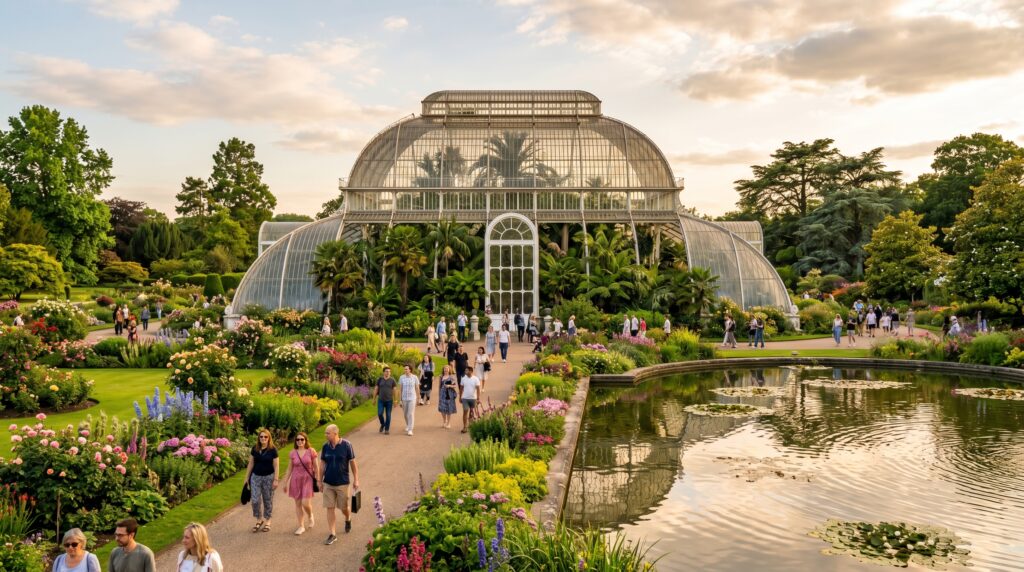
Close out your London adventure with a visit to the Royal Botanic Gardens at Kew. Home to over 30,000 plant species from every corner of the world, these UNESCO World Heritage Gardens are a feast for the senses in every season. The Victorian-era glasshouses, including the iconic Palm House, are architectural wonders in their own right.
London Bucket List: Practical Tips Before You Go
- Get an Oyster Card for seamless travel on the Tube, buses, and overground trains
- Book attractions in advance — London’s most popular spots sell out, especially in summer
- Many top attractions are free, including the British Museum, National Gallery, Tate Modern, and Sky Garden
- Wear comfortable shoes — London is a walking city and distances between landmarks are often deceiving on the map
- Check opening hours seasonally, as some sites adjust times throughout the year
How to Book Hotels and Flights for Your London Trip
Planning your London travel itinerary doesn’t have to be stressful — with a little strategy, you can save significantly on both flights and accommodation without compromising on experience.
Booking Flights to London
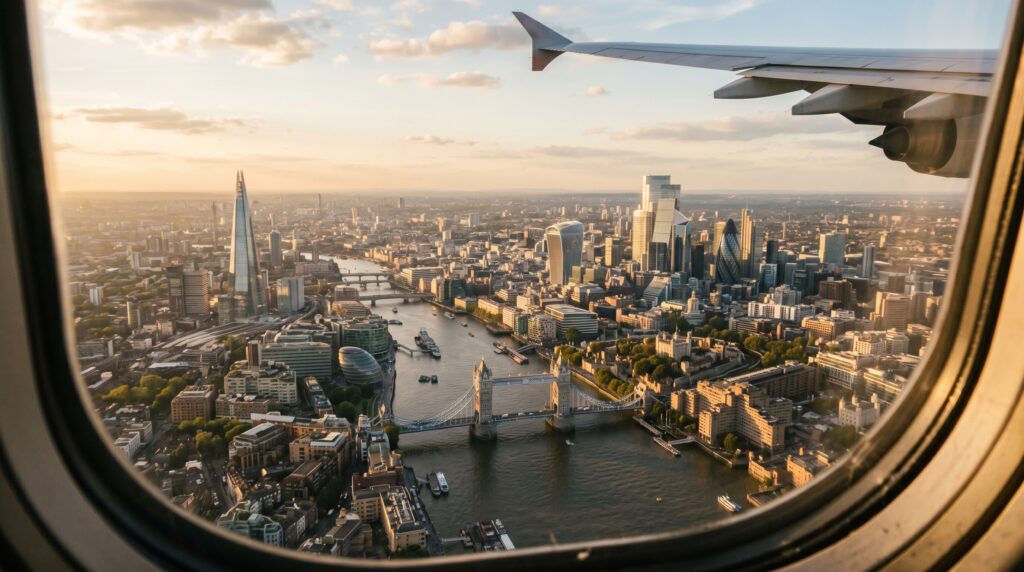
London is served by six airports, but most international travelers land at Heathrow (LHR) or Gatwick (LGW). Heathrow is the better choice if you’re staying in central London — the Elizabeth Line connects the airport directly to Paddington, Bond Street, and Liverpool Street in under 30 minutes.
For the best flight deals to tick off your London bucket list 2026, keep these tips in mind:
- Book 6–8 weeks in advance for the best fares on transatlantic and African routes
- Fly midweek (Tuesday or Wednesday) — flights on these days are consistently cheaper than weekend departures
- Set fare alerts on Google Flights or Skyscanner and track prices over a few weeks before committing
- Consider flying into Gatwick or Stansted — budget carriers like easyJet and Ryanair use these airports and can slash your airfare considerably
- Avoid peak season (July–August and Christmas) if budget is a priority — spring and autumn flights to London are significantly cheaper and the weather is often just as pleasant
Where to Stay in London
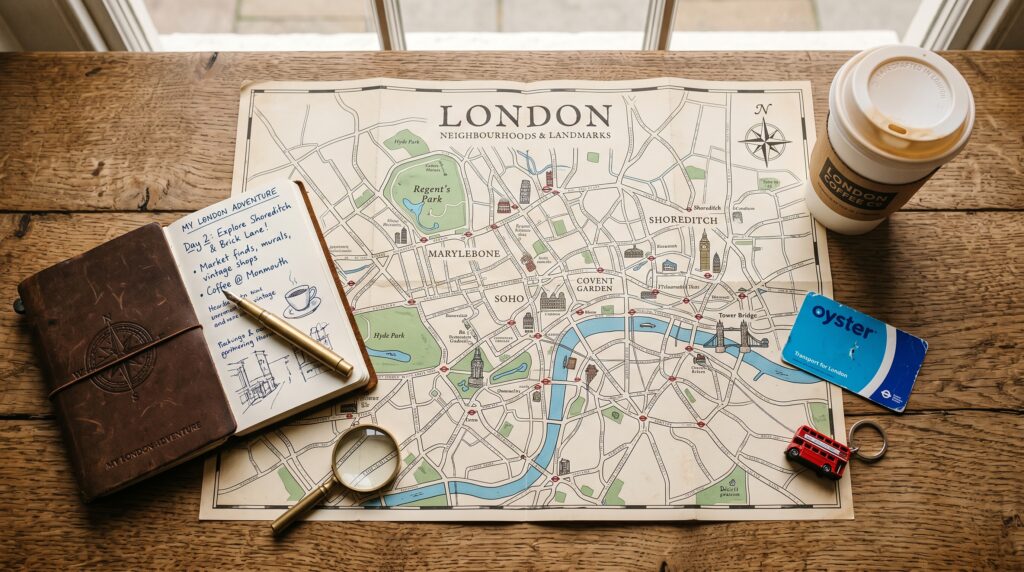
London’s neighbourhoods each have a distinct personality, so where you stay shapes your entire experience. Here’s a quick guide to help you choose based on your London bucket list priorities:
| Neighbourhood | Best For | Vibe |
|---|---|---|
| South Bank | First-timers, sightseeing | Walking distance to the London Eye, Tate Modern, Borough Market |
| Covent Garden | Theatre, shopping, nightlife | Central, lively, great transport links |
| Kensington | Museums, families, quieter stay | Near Natural History Museum and Hyde Park |
| Shoreditch | Art, food, trendy scene | East London cool, great street art and markets |
| Westminster | Iconic London feel | Steps from Buckingham Palace, Big Ben, and St. James’s Park |
For london bucket list experiences on a budget, look at Premier Inn or Travelodge properties — both offer clean, reliable rooms in central locations from around £80–120/night. Mid-range travelers will love boutique hotels in Covent Garden or Clerkenwell, while luxury seekers should look at The Ned, Claridge’s, or The Hoxton for a genuinely iconic London stay.
Booking tips:
- Use Booking.com or Hotels.com for flexible cancellation options
- Book at least 60 days ahead for summer travel — London hotels sell out fast
- Consider serviced apartments (via Airbnb or Sonder) if you’re staying 5+ nights — they work out cheaper and give you kitchen access
- Stay Zone 1 or Zone 2 on the Tube map to keep transport costs down and make the most of your london travel itinerary
How to Create a Budget-Friendly London Travel Itinerary
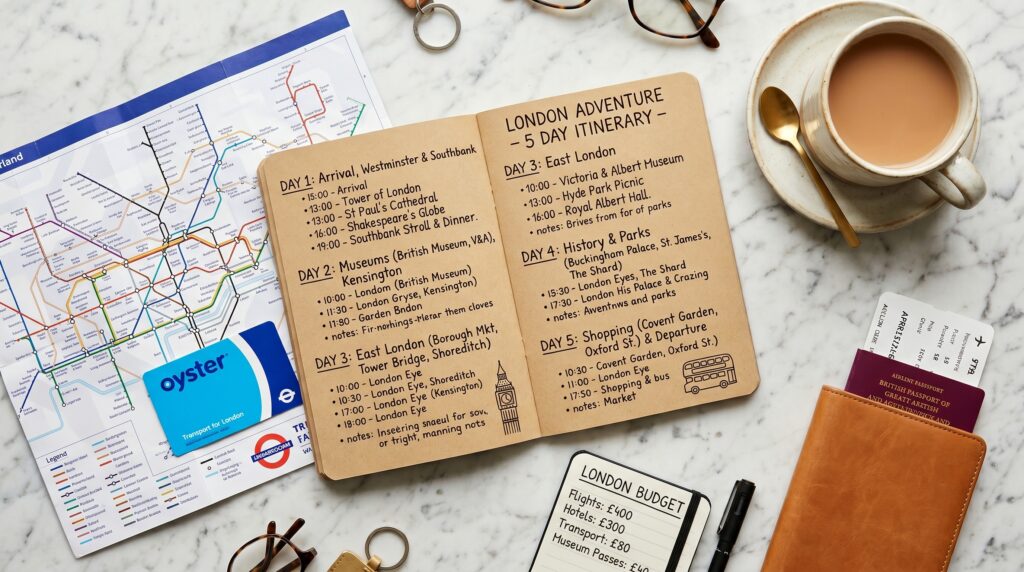
London has a reputation for being expensive — and while it certainly can be, the truth is that a well-planned london travel itinerary can be surprisingly affordable. The city has one of the most generous free culture scenes of any capital in the world, and with a few smart choices, you can tick off a serious London bucket list without draining your savings.
Set a Realistic Daily Budget
Before anything else, know your numbers. Here’s a rough daily budget breakdown for London in 2026:
| Budget Level | Daily Spend (per person) | What It Covers |
|---|---|---|
| Shoestring | £50–70 | Hostel dorm, night market meals, free museums, Oyster Card |
| Mid-range | £120–180 | 3-star hotel, sit-down meals, 1–2 paid attractions |
| Comfortable | £250+ | Boutique hotel, fine dining, shows, private tours |
The good news? Many of the best london bucket list experiences — the British Museum, National Gallery, Tate Modern, Sky Garden, and the Changing of the Guard — are completely free. Your budget mostly goes toward accommodation, food, and transport.
Save Big on Accommodation
Accommodation is typically your biggest expense on any london travel itinerary, so this is where smart planning pays off most.
- Stay in Zone 2 rather than Zone 1 — hotels are noticeably cheaper just one Tube stop outside the city center, and the commute is minimal
- Book at least 60 days ahead for summer travel — London hotels fill up fast and last-minute prices spike dramatically
- Consider serviced apartments on Airbnb or Sonder if you’re staying 5+ nights — you’ll save on meals by cooking breakfast and saving restaurants for dinner only
- Check Premier Inn and Travelodge — both offer clean, well-located rooms from around £70–100/night and frequently run early-bird discounts
- Try a house swap if you live somewhere desirable — platforms like Home Exchange let London residents swap with international visitors at no cost
Keep Your Flight Costs Down
Flights are often the single largest line item in a london bucket list 2026 budget. These strategies consistently save money:
- Book 6–8 weeks in advance for the best fares — prices tend to spike in the final two weeks before departure
- Fly into Gatwick, Stansted, or Luton instead of Heathrow — budget carriers like easyJet and Ryanair use these airports and can cut your airfare by 30–50%
- Travel midweek — Tuesday and Wednesday departures are almost always cheaper than Friday or Sunday flights
- Use Google Flights’ price tracker — set an alert for your route and wait for a dip before booking
- Avoid July, August, and Christmas — these are peak season and both flights and hotels cost significantly more
Get Around for Less
Transport can quietly eat your budget if you’re not careful. The smartest london travel tips for getting around cheaply:
- Use an Oyster Card or contactless bank card — the daily fare cap means you’ll never pay more than a set amount regardless of how many Tube or bus journeys you take
- Take the bus over the Tube — buses are cheaper and you get to see the city as you travel; routes 9, 11, and 15 pass many major landmarks
- Walk between central landmarks — Tower Bridge to Borough Market, South Bank to Covent Garden, and Westminster to Buckingham Palace are all very walkable
- Avoid black taxis — they’re iconic but expensive; use Uber or the Elizabeth Line for airport transfers instead
Eat Well Without Overspending
Food in London does not have to be expensive if you know where to look. Some of the best meals you’ll eat on a london travel itinerary come from:
- Borough Market — artisan food stalls with generous samples and affordable hot food
- Pret à Manger or Marks & Spencer Food — fresh, quality grab-and-go lunches for under £6
- Pub grub — a hearty meat pie or fish and chips in a traditional British pub typically costs £10–14 and includes the full atmospheric experience
- Chinatown (Soho) — some of the most satisfying and affordable sit-down meals in the city center, from £8–12 per dish
- Lidl or Tesco Express picnic — stock up on snacks and lunch supplies for a Hyde Park or South Bank picnic; it’s one of the most enjoyable free london bucket list experiences there is
Save on Paid Attractions and Shows
A few of the top london bucket list 2026 experiences do carry admission fees — here’s how to reduce those costs:
- Buy tickets online in advance — the Tower of London, London Eye, and St. Paul’s Cathedral all offer cheaper rates when booked ahead versus at the door
- Get the London Pass — a digital sightseeing pass covering 80+ attractions at a discounted bundled rate, ideal if you plan to visit 3 or more paid sites
- TKTS booth at Leicester Square — get West End theatre tickets at 25–50% off on the day of the show
- Shakespeare’s Globe groundling tickets — standing tickets start from under £10 and are the best theatre deal in all of London
- Free evensong services at Westminster Abbey and St. Paul’s Cathedral — you get the full experience of these iconic spaces for free
Sample 5-Day Budget London Travel Itinerary
Here’s a lean, experience-rich london travel itinerary that prioritizes free attractions while still delivering the full London bucket list experience:
- Day 1: Arrive → South Bank walk → Tate Modern (free) → Borough Market lunch → Tower Bridge at sunset
- Day 2: British Museum (free) → Covent Garden street performers → National Gallery (free) → Trafalgar Square
- Day 3: Hyde Park picnic → Buckingham Palace Changing of the Guard (free) → Notting Hill walk → Portobello Road Market
- Day 4: Tower of London (book online) → Sky Garden (free, pre-book) → Shoreditch street art walk → Brick Lane food
- Day 5: Greenwich by train → Royal Observatory Prime Meridian (free grounds) → Cutty Sark → departure
Total estimated spend for 5 days at mid-range level: £500–650 per person, excluding flights — a very achievable figure for one of the world’s great capital cities.
Frequently Asked Questions About Visiting London
How many days do I need to experience a proper London bucket list?
Most first-time visitors need a minimum of 5–7 days to work through the core of any London bucket list — the iconic landmarks, a neighbourhood or two, a market, and at least one day trip. That said, a london travel itinerary of 10 days lets you go deeper, exploring areas like Greenwich, Notting Hill, and Shoreditch without feeling rushed. London is one of those cities where the longer you stay, the more you realize you’ve barely scratched the surface.
What are the best free things to do on a London bucket list in 2026?
Some of the best london bucket list 2026 experiences cost absolutely nothing:
- British Museum — free entry, one of the world’s greatest collections
- National Gallery — free entry, over 2,300 paintings
- Tate Modern — free entry, world-class contemporary art
- Sky Garden — free panoramic views (pre-booking required)
- Changing of the Guard at Buckingham Palace — free to watch from the street
- Hyde Park, Regent’s Park, Greenwich Park — all free, all stunning
London has a generous culture of free public museums and galleries that make it one of the most accessible major cities in the world for budget travelers.
What is the best time of year for London bucket list experiences?
The sweet spot for london bucket list experiences is late April through June or September through October. Spring brings blooming parks, longer days, and manageable crowds. Autumn offers crisp air, golden foliage in Hyde Park and Kew Gardens, and fewer tourists than peak summer. July and August are the busiest and most expensive months — great for energy but expect queues everywhere and higher hotel prices.
Absolutely. One of the best london travel tips you’ll receive is to download the Citymapper app before you land — it gives real-time routing across the Tube, buses, overground, and the Elizabeth Line in one place. Pick up an Oyster Card or link your contactless bank card at any Tube station and you’ll cap your daily spending automatically, never paying more than the daily fare cap regardless of how many journeys you take.
What should I include in a first-time London travel itinerary?
A solid london travel itinerary for first-timers should cover at least one iconic landmark (Tower of London or Buckingham Palace), one world-class free museum (British Museum or National Gallery), one market (Borough Market or Covent Garden), one panoramic view (the London Eye or Sky Garden), and one neighbourhood walk (Notting Hill or South Bank). From there, layer in the places that match your personal interests — history, food, art, or nightlife — and let the city surprise you.
How do I get around London on a budget?
The Tube (London Underground) is the fastest way to move around the city, but buses are significantly cheaper and let you see far more as you travel. One of the best london travel tips for budget visitors: the iconic red double-decker bus routes 9, 11, and 15 pass directly in front of many major landmarks — it’s essentially a free sightseeing tour if you already have an Oyster Card loaded. Walking between landmarks in central London is also highly underrated — many of the 15 places on this London bucket list are within a 20-minute walk of each other.