Skip to content


Japan has landscapes that stand out in ways that feel different from other countries. Mountains often get seen as sacred and caves carry old stories while some bays glow because of living things in the water.
If someone is heading there to skip the usual spots and focus on nature then those top ten wonders make sense to look at. It is not always clear why certain ones rank higher but they seem to show the wild side pretty well. The whole thing is hard to picture until you read more about each place.
Contents
- 1 1. Mount Fuji: Japan’s iconic giant
- 2 2. Takachiho Gorge: Myth carved in stone
- 3 3. Tottori Sand Dunes: Japan’s desert by the sea
- 4 4. Jigokudani: Hell Valley and snow monkeys
- 5 5. Akiyoshido Cave: A hidden world underground
- 6 6. Toyama Bay: Where the ocean lights up
- 7 7. Yakushima Island: Japan’s ancient forest
- 8 8. Kabira Bay: Glass-clear tropical escape
- 9 9. Kumano Kodo: Pilgrimage through the mountains
- 10 10. Arashiyama Bamboo Grove: A green tunnel of calm
- 11 FAQs about visiting Japan
1. Mount Fuji: Japan’s iconic giant

No list of natural wonders of Japan is complete without Mount Fuji. This perfectly symmetrical volcano rises above lakes and towns, often wearing a crown of snow and a halo of clouds. Seen from the bullet train or from Hakone’s hot springs, it has a quiet, commanding presence that feels almost spiritual.
If you visit in summer, you can hike up to the 5th Station, halfway up the mountain, and watch the landscape change from city sprawl to alpine silence. Even if you never set foot on the trail, simply catching Fuji’s reflection in Lake Kawaguchi at sunrise is enough to make you understand why it’s been painted, photographed, and worshipped for centuries.
2. Takachiho Gorge: Myth carved in stone

On Kyushu Island, Takachiho Gorge looks like it was carved for a fantasy movie. Sheer basalt walls rise on either side of a narrow river, their dark columns revealing the volcanic history that shaped this region over thousands of years. As you glide along the water in a small rowboat, mist from the Minainotaki Waterfall cools the air and echoes through the canyon.
This is one of the natural wonders of Japan where mythology and scenery blend. Local legends say the gods once hid here, and when you see the way the light filters through the trees onto the water, it’s easy to believe. Whether you paddle or simply walk the trail along the edge, the gorge feels more like a sacred corridor than a simple sightseeing stop.
3. Tottori Sand Dunes: Japan’s desert by the sea

Head to the Sea of Japan coast and you’ll find something totally unexpected: the Tottori Sand Dunes, a vast rolling landscape of golden sand that looks more Sahara than Japan. Stretching for kilometers along the shoreline, the dunes shift shape constantly under the wind, so the view never looks quite the same twice.
This is one of the most surprising natural wonders of Japan because of how playful it is. You can climb to the highest peaks and look out over the ocean, try sandboarding down the slopes, or simply walk barefoot at sunset as the dunes cool and the sky turns pink. When the wind picks up, ripples form across the surface, creating patterns that photographers and drone lovers will adore.
4. Jigokudani: Hell Valley and snow monkeys

Jigokudani, which literally means “Hell Valley,” sounds intimidating, but it’s one of the most fascinating places to experience Japan’s geothermal energy up close. Here in Nagano, steam billows from vents in the earth, hot springs bubble beside patches of snow, and the whole valley smells faintly of sulfur. The contrast between frozen ground and boiling water gives the landscape an otherworldly feel.
What truly makes Jigokudani one of the standout natural wonders of Japan, though, are its famous snow monkeys. Japanese macaques soak in the steaming onsen pools like relaxed spa guests, their red faces peeking out from clouds of vapor. Watching them groom each other and close their eyes in bliss is both endearing and strangely relatable on a cold winter day.

Beneath the grassy karst of Akiyoshidai in Yamaguchi lies Akiyoshido Cave, the longest cave in Japan and one of its most impressive underground wonders. Stretching for more than 10 kilometers, it’s a cool, echoing world of stalactites, stalagmites, terraces, and pools carved by water over millions of years.
Walking along the illuminated pathways, you pass formations that look like frozen waterfalls and layered rice fields. The scale of some chambers is astonishing—you feel small in the best way, like you’ve stepped into the skeleton of the planet itself. Outside, the Akiyoshidai plateau’s limestone pinnacles and open grasslands continue the geological story above ground, making this one of the most complete natural wonders of Japan for anyone obsessed with earth science and landscape photography.
6. Toyama Bay: Where the ocean lights up

Toyama Bay proves that not all natural wonders of Japan are on land. Some glow in the sea. Each spring, firefly squids rise from the deep and gather near the surface, lighting up the water with pulses of electric blue. On the right night, the shoreline looks as if someone has scattered stars across the waves.
The bay is also known for encounters with giant squid, adding a hint of mystery and “sea monster” lore to the experience. Local boats and tours head out in the early hours to watch the bioluminescent display, and if you’re into night photography, this is one of the most magical natural wonders of Japan you can witness. The combination of crisp mountain air, cold water, and living light feels surreal in the best way.
7. Yakushima Island: Japan’s ancient forest

Yakushima Island, off the southern coast, is a dream for anyone who loves deep, mossy forests. Its cedar trees are some of the oldest in Japan, with certain giants believed to be several thousand years old. Trails wind through thick roots and soft ground, passing trunks so wide it takes several people to wrap their arms around them.
Rain falls often here, feeding curtains of moss and ferns so the entire landscape feels lush and alive. It’s no surprise Yakushima inspired the forest scenes in Studio Ghibli films; walking under these trees feels like entering a living temple. Among all the natural wonders of Japan, Yakushima might be the one that best captures the country’s deep respect for nature and time.
8. Kabira Bay: Glass-clear tropical escape

On Ishigaki Island in Okinawa, Kabira Bay shows off Japan’s tropical side. The water here is impossibly clear, shifting from pale turquoise to rich sapphire over white sand and coral reefs. Because the currents can be strong, swimming is restricted—but that’s actually part of what keeps the bay pristine.
Instead, you glide over the reef in a glass‑bottom boat, watching schools of fish swirl among coral heads and patches of sea grass. It’s a gentle, accessible way to see the underwater world, especially if you’re traveling with kids or aren’t keen on diving. With its calm lagoon and island views, Kabira Bay earns its place among the top natural wonders of Japan as a beautiful contrast to the country’s snow‑covered mountains and dense forests.
9. Kumano Kodo: Pilgrimage through the mountains

The Kumano Kodo is more than a hiking trail—it’s a thousand‑year‑old pilgrimage route that winds through forests, villages, and misty mountain passes in the Kansai region. Designated a World Heritage site, it’s one of only two pilgrimage networks in the world with that status, which already tells you how special it is.
As you walk, stone steps give way to dirt paths, cedar trunks rise on either side, and shrines appear suddenly between trees. This is one of the natural wonders of Japan where culture and landscape are inseparable; the journey itself is the attraction. Each stamp you collect along the way becomes a physical memory of hours spent breathing mountain air, listening to streams, and slowing down in a country that’s often associated only with fast trains and bright neon.
10. Arashiyama Bamboo Grove: A green tunnel of calm

Just outside Kyoto, Arashiyama Bamboo Grove is surprisingly simple: tall bamboo, narrow paths, and soft light. Yet together, these elements create one of the most unforgettable natural wonders of Japan. The bamboo shoots rise in dense clusters, their leaves forming a high canopy that filters sunlight into gentle green.
Walk here early in the morning before the crowds, and you’ll hear the bamboo creak and rustle as it sways. The straight lines of the stalks draw your eye upward, giving the whole scene a quiet, vertical elegance. Nearby, the Katsura River and surrounding hills complete the picture, making Arashiyama a perfect example of how Japan blends nature, temples, and everyday life in a single, walkable district.
These ten natural wonders of Japan show just how diverse the country really is—from glowing bays and desert‑like dunes to ancient forests and sacred mountains. If you were planning a trip right now, which of these places would you be most excited to turn into a full travel blog, Pinterest pin set, and digital guide?
FAQs about visiting Japan
What are the must-visit historical sites in Japan?
Some of the must-visit historical sites in Japan include the ancient city of Kyoto, famous for its beautifully preserved temples, shrines, and traditional streets. Kyoto is where you’ll find iconic spots like Fushimi Inari Taisha, Kiyomizu-dera, and the serene Arashiyama district. For a deeper understanding of modern history, the Hiroshima Peace Memorial Park and Museum offer a powerful look at the impact of World War II and Japan’s commitment to peace.
If you love castles, Himeji Castle is a must-see—this UNESCO World Heritage Site is one of the best-preserved samurai-era fortresses in the country. For a glimpse of rural life, head to Shirakawa-go, a historic mountain village known for its unique gassho-zukuri farmhouses and snowy winter landscapes.
What is the significance of cherry blossoms in Japan?
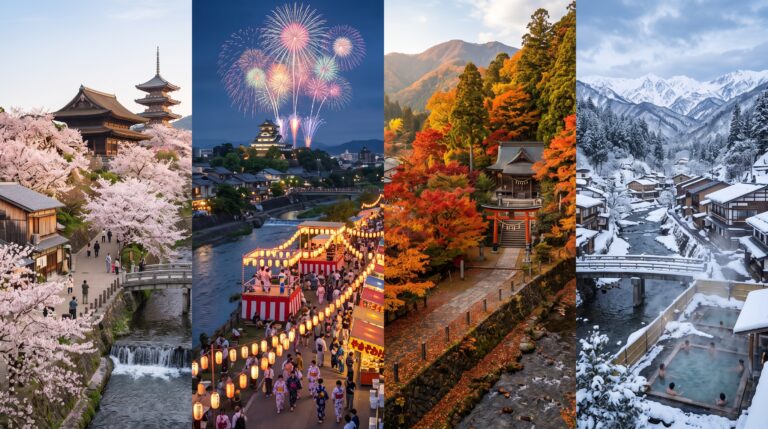
Cherry blossoms in Japan, known as sakura, are far more than just beautiful flowers—they’re deeply woven into Japanese culture and identity. Sakura symbolize the fleeting nature of life, reminding people that beauty and happiness are temporary and should be cherished while they last. Each spring, locals and visitors take part in hanami, or cherry blossom viewing, gathering under the trees in parks and along rivers to share food, drinks, and conversation. This tradition makes cherry blossom season one of the most magical times to experience Japan, as cities and countryside alike turn into soft pink tunnels of blooms.
What are some popular festivals to experience in Japan?
Japan’s festivals, or matsuri, are some of the most exciting cultural experiences you can have during your trip. The Gion Matsuri in Kyoto is one of the country’s most famous festivals, taking place in July with grand floats, traditional music, and people in colorful yukata filling the streets. If you’re visiting Shikoku, the Awa Odori in Tokushima is known for its lively dance processions and energetic atmosphere, where locals and visitors dance together late into the night.
In winter, the Sapporo Snow Festival in Hokkaido transforms the city into a snowy wonderland with massive ice and snow sculptures, projection mapping shows, and seasonal food stalls—perfect if you want to see a different side of Japan beyond cherry blossoms and summer travel.
What are the best ways to experience Japanese cuisine?
One of the best ways to experience Japanese cuisine is to sit at a sushi counter and watch the chef prepare each piece right in front of you. This lets you enjoy incredibly fresh seafood and appreciate the skill behind every cut. For a more casual evening, visit an izakaya, Japan’s version of a cozy tapas bar, where you can order a variety of small dishes—from grilled skewers to seasonal specials—paired with beer or sake.
If you want a truly memorable dining experience, try kaiseki, a traditional multi-course meal that showcases Japan’s dedication to seasonal ingredients, delicate flavors, and elegant presentation. Don’t forget to sample regional specialties as you travel, like ramen in different styles, okonomiyaki in Osaka, and street food at local markets.
What are some iconic landmarks to visit in Japan?
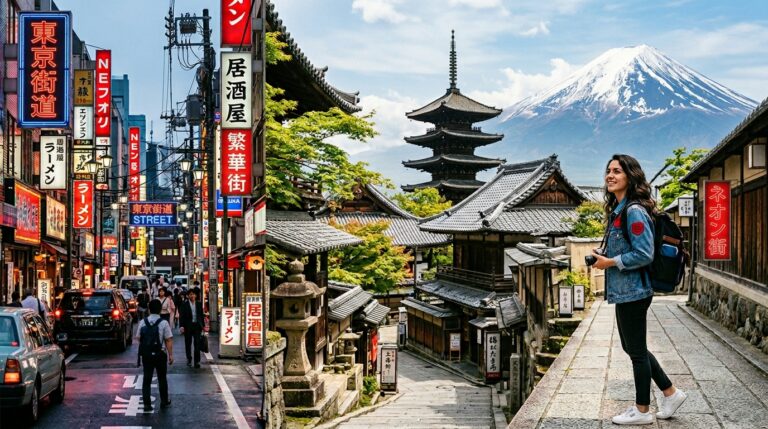
Japan is full of iconic landmarks that combine natural beauty and cultural heritage. Mount Fuji is perhaps the most recognizable, a perfectly shaped volcano that has inspired artists and travelers for generations. Nearby areas like Hakone and the Fuji Five Lakes region offer stunning views and relaxing hot springs.
In Kyoto, Kinkaku-ji, also known as the Golden Pavilion, is a shimmering temple reflected in a tranquil pond, and it’s one of the most photographed sites in Japan. For a taste of modern urban life, head to Shibuya Crossing in Tokyo, where hundreds of people cross from all directions in perfect controlled chaos, surrounded by neon lights, giant screens, and endless shops. These landmarks capture the balance of tradition and innovation that makes Japan such a unique destination.