Skip to content


You might not know that Germany has over 20,000 villages, many of which have maintained their historic charm. As you venture into the countryside, you'll discover hidden gems like fairytale villages, medieval towns, and picturesque coastal towns that seem untouched by time. The combination of traditional architecture, breathtaking landscapes, and rich history creates a unique experience that's quintessentially German. But what sets these villages apart, and which ones should you prioritize on your next trip? From the famous Romantic Road to the lesser-known villages of Saxony, the journey to discover Germany's most beautiful villages is just beginning.
Contents
- 1 Key Takeaways
- 2 Rothenburg Ob Der Tauber
- 3 German Fairy Tale Road
- 4 Quaint Villages of Bavaria
- 5 Coastal Towns of Mecklenburg
- 6 Oberammergau Village Charm
- 7 Moselle River Village Life
- 8 Idyllic Saxony Villages
- 9 Romantic Road Villages
- 10 Black Forest Village Delights
- 11 Frequently Asked Questions
- 12 Conclusion
Key Takeaways
- Rothenburg ob der Tauber is a picturesque German village famous for its exceptionally well-preserved medieval architecture.
- Traditional Alpine Houses in villages like Oberammergau showcase unique charm with brightly colored facades and ornate wood carvings.
- Moselle River Villages offer wine tastings, historic landmarks, and quaint half-timbered houses in a tranquil atmosphere.
- Idyllic Saxony Villages like Oberwiesenthal and Seiffen provide a serene atmosphere, traditional wooden toy-making skills, and stunning winter landscapes.
- Black Forest Villages feature picturesque landscapes, forest hikes, and local cuisine, with must-try experiences like hiking to the top of the Feldberg mountain.
Rothenburg Ob Der Tauber
You step into Rothenburg ob der Tauber, and it's like walking into a medieval fairy tale.
This picturesque German village is famous for its exceptionally well-preserved medieval architecture.
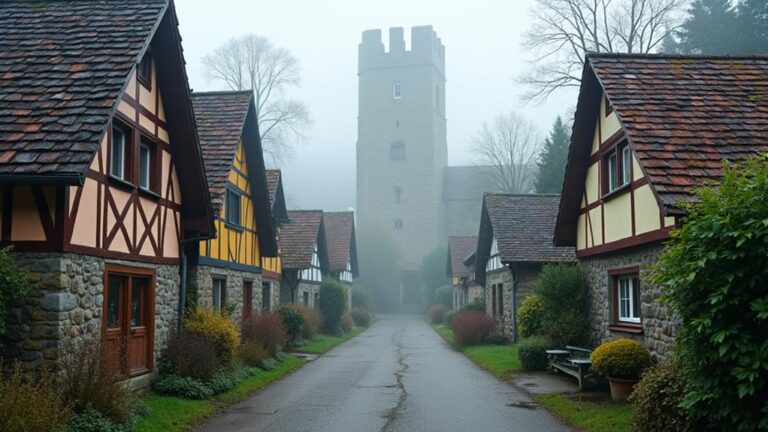
As you wander through the cobblestone streets, you're surrounded by charming half-timbered houses that date back to the 12th to 15th centuries.
The colorful buildings, with their wooden beams and ornate facades, seem to lean in, as if sharing a secret.
The village's historic center is filled with medieval landmarks like the 13th-century St. James' Church and the iconic Plönlein, a charming half-timbered house that has become a symbol of Rothenburg.
The town's walls and towers have been preserved, giving you a glimpse into the past.
Take a stroll along the fortifications and enjoy breathtaking views of the surrounding countryside.
With its unique blend of medieval charm and natural beauty, Rothenburg ob der Tauber is a must-visit destination for anyone interested in history, architecture, and culture.
Its enchanting atmosphere and picturesque scenery make it a truly unforgettable experience.
German Fairy Tale Road
Rothenburg ob der Tauber is just one of the many charming destinations along the German Fairy Tale Road, a scenic route spanning over 600 miles through the heart of Germany.
As you travel along this enchanting route, you'll discover a plethora of fairy tale castles, medieval towns, and picturesque villages that will transport you to a world of magic and wonder.
You'll have the opportunity to explore historic castles, such as Sababurg Castle, also known as the "Sleeping Beauty Castle," and Trendelburg Castle, with its impressive medieval architecture.
The German Fairy Tale Road is steeped in history and medieval legends, with many of the towns and villages along the route having remained largely unchanged for centuries.
As you wander through the cobblestone streets, you'll feel as though you've stepped into a fairy tale, with the charming half-timbered houses, quaint shops, and traditional inns adding to the magical atmosphere.
With its unique blend of history, culture, and natural beauty, the German Fairy Tale Road is a must-visit destination for anyone looking to experience the authentic charm of Germany.
Quaint Villages of Bavaria
As you explore the Quaint Villages of Bavaria, you'll discover charming towns along the Romantic Road, like Augsburg and Füssen, with their rich history and well-preserved architecture.
These picturesque towns are filled with traditional Alpine houses, adorned with colorful facades, ornate balconies, and steeply pitched roofs.
You'll be enchanted by the unique blend of German and Austrian influences that define the distinctive character of these villages.
Romantic Road Towns
Traversing the picturesque landscapes of southern Bavaria, the Romantic Road towns unfold like a charming tapestry of medieval architecture, quaint streets, and enchanting villages.
You'll be captivated by the medieval town of Rothenburg ob der Tauber, with its remarkably well-preserved medieval architecture that appears to be frozen in time.
Stroll along the charming streets and admire the half-timbered houses with their characteristic facades, ornate carvings, and brightly colored window boxes.
As you wander through the villages, you'll notice the distinctive medieval architecture that defines the Romantic Road towns.
Dinkelsbühl, with its cobblestone streets and intricately carved half-timbered houses, is a must-visit destination.
The town's medieval charm is further enhanced by its well-preserved town walls and towers.
The towns along the Romantic Road offer a unique glimpse into Germany's rich history and cultural heritage.
You'll be immersed in the region's unique character, from the colorful market squares to the charming town halls.
Take your time to explore these enchanting villages and soak up the atmosphere, and you'll leave with unforgettable memories of your journey along the Romantic Road.
Traditional Alpine Houses
- Local building materials: Traditional Alpine houses are built using local materials such as wood, stone, and clay, which are durable and resistant to the elements.
- Intricate wood carvings: The wooden facades of these houses are often adorned with intricate carvings, which add a touch of elegance and sophistication.
- Steeply pitched roofs: The steeply pitched roofs of these houses are designed to shed snow and ice, ensuring that the building remains secure and stable throughout the winter months.
These traditional Alpine houses aren't just functional, but also beautiful, with their ornate facades and charming atmosphere.
Coastal Towns of Mecklenburg
Nestled along the picturesque shores of the Baltic Sea, Mecklenburg's coastal towns embody the quintessential charm of Germany's northernmost region.
As you stroll through the cobblestone streets of these enchanting towns, you'll discover the rich Mecklenburg heritage that permeates every aspect of life here. From the colorful fishermen's houses to the majestic brick Gothic churches, the architecture in these towns is a legacy to the region's storied past.
The Baltic coastline, with its rugged cliffs and scenic beaches, offers breathtaking views that will leave you in awe.
As you walk along the shore, you'll notice the unique blend of Scandinavian and German influences that define the region's culture.
The charming towns of Warnemünde, Kühlungsborn, and Boltenhagen are must-visits, with their vibrant markets, quaint shops, and mouth-watering seafood restaurants serving up fresh catches from the Baltic Sea.
With its stunning natural beauty, rich history, and warm hospitality, Mecklenburg's coastal towns are the perfect destination for anyone looking to experience the authentic charm of northern Germany.
Whether you're a nature lover, history buff, or simply looking to relax, you'll find something to cherish in these enthralling towns.
Oberammergau Village Charm
The picturesque village of Oberammergau, situated in the Ammergau Alps of Bavaria, is a haven of traditional German charm that you'll get to experience up close.
As you wander through the village, you'll be struck by the unique Alpine Architecture that seems to blend seamlessly into the surrounding mountains.
The houses, with their brightly colored facades and ornate wood carvings, are a monument to the region's rich cultural heritage.
Oberammergau is also famous for its Village Legends, which are still celebrated to this day.
Every 10 years, the village hosts the Passion Play, a re-enactment of the life and death of Jesus Christ that draws visitors from all over the world.
Some of the must-see attractions in Oberammergau include:
- The Oberammergau Church, a stunning example of Baroque architecture that dates back to the 18th century.
- The Pilatushaus, a museum that showcases the village's history and culture.
- The nearby Ettal Abbey, a beautiful Benedictine monastery that's steeped in history and tradition.
Moselle River Village Life
As you follow the winding path of the Moselle River, you'll discover a string of charming villages that seem to have been plucked straight from a fairy tale.
The picturesque landscape is dominated by steep vineyards, medieval castles, and quaint half-timbered houses. As you wander through the villages, you'll be enchanted by the tranquil atmosphere and the warm hospitality of the locals.
One of the best ways to experience the Moselle River Village Life is by taking a river cruise.
Imagine sailing along the river, surrounded by breathtaking scenery, and stopping at charming villages along the way. You'll have the opportunity to visit local wineries and indulge in wine tastings, sampling some of the region's renowned Riesling wines.
The villages are also filled with historic landmarks, such as the iconic Beilstein Castle and the stunning Bernkastel-Kues town square. As you explore the Moselle River villages, you'll uncover a treasure trove of history, culture, and natural beauty that will leave you with unforgettable memories.
Whether you're looking for relaxation or adventure, the Moselle River villages have something for everyone.
Idyllic Saxony Villages
As you explore Saxony's picturesque villages, you'll discover Oberwiesenthal's charm, nestled in the Ore Mountains.
This region is also home to Seiffen, a village famous for its traditional wooden toy-making skills that have been passed down through generations.
You'll also find Annaberg, a historic mountain town boasting stunning architecture and breathtaking views.
Oberwiesenthal Village Charm
Perched on the southeastern slopes of the Fichtelberg mountain in Saxony, Oberwiesenthal village beckons you to unwind in its serene, snow-covered landscape.
This idyllic winter wonderland offers a tranquil atmosphere, perfect for relaxation and rejuvenation.
As you explore the village, you'll discover a plethora of activities to keep you engaged, from winter hiking to indulging in local cuisine.
When it comes to winter hiking, Oberwiesenthal has plenty to offer:
- Panoramic views: Take a hike up the Fichtelberg mountain, and be rewarded with breathtaking views of the surrounding landscape.
- Tranquil forests: Wander through the snow-covered forests, and immerse yourself in the peaceful atmosphere.
- Well-marked trails: Oberwiesenthal's trails are well-marked, making it easy for you to navigate and explore the area.
As you refuel after a day of hiking, be sure to try some of the local cuisine, such as traditional Saxon dishes like Sauerbraten and Leipziger Allerlei.
Oberwiesenthal's local restaurants and cafes serve up delicious meals, made with fresh, locally-sourced ingredients.
With its stunning winter landscapes and rich cultural heritage, Oberwiesenthal village is the perfect destination for a relaxing and rejuvenating getaway.
Seiffen Toy Village
Every year, thousands of visitors flock to Seiffen Toy Village, a picturesque destination nestled in the heart of the Ore Mountains in Saxony, Germany.
As you stroll through the village's charming streets, you'll discover a treasure trove of wooden figurines, intricately crafted by local artisans. The village's rich tradition of toy-making dates back to the 18th century, and you can witness this heritage firsthand by visiting the numerous workshops and demonstrations.
The village's festive atmosphere is particularly enchanting during the winter months, when the annual Christmas markets take over the streets.
You'll find an array of traditional wooden toys, ornaments, and decorations on display, making it the perfect opportunity to pick up some unique souvenirs. As you wander through the stalls, you'll be treated to the enticing aromas of mulled wine, gingerbread, and roasted chestnuts.
With its unique blend of traditional craftsmanship and festive cheer, Seiffen Toy Village is a must-visit destination for anyone looking to experience the authentic charm of Germany's Ore Mountains.
Annaberg Mountain Town
Tucked away in the heart of the Ore Mountains, Annaberg Mountain Town is a hidden gem waiting to be discovered in the idyllic Saxony villages of Germany.
As you wander through the town's charming streets, you'll be surrounded by picturesque half-timbered houses and historic buildings that date back to the 16th century.
Annaberg's rich mining history is still palpable today, with many of its old mines now converted into museums and tourist attractions.
The town's stunning natural surroundings offer endless opportunities for outdoor adventure.
You can explore the Ore Mountains on foot or by bike, taking in the breathtaking views of the surrounding landscape.
If you're feeling particularly adventurous, try your hand at mountain hiking, with plenty of trails to suit all levels of experience.
Some of the top things to do in Annaberg include:
- Exploring the town's historic center, with its beautifully preserved buildings and charming streets.
- Visiting the Annaberg Mining Museum, which offers a fascinating glimpse into the town's mining history.
- Hiking to the top of the Pöhlberg, which offers breathtaking views of the surrounding mountains.
Romantic Road Villages
Imagine yourself strolling through picturesque villages lined with medieval architecture, half-timbered houses, and cobblestone streets – this is what awaits you on Germany's famous Romantic Road.
As you wander through these enchanting villages, you'll discover a treasure trove of medieval architecture, with intricately carved facades, grand churches, and imposing fortifications.
The scenic backdrops of rolling hills, verdant forests, and sparkling lakes only add to the villages' charm.
Harburg, a charming village on the Romantic Road, boasts a stunning medieval castle that dates back to the 12th century.
The village of Dinkelsbühl, with its well-preserved medieval architecture, is another must-visit destination on this route.
Its cobblestone streets are lined with colorful half-timbered houses, quaint shops, and traditional bakeries.
As you explore these villages, you'll feel as though you've stepped back in time.
The Romantic Road is a journey through Germany's rich history and culture, and these villages are the perfect places to experience it.
With their unique blend of medieval architecture and scenic backdrops, they're sure to leave you with unforgettable memories.
Black Forest Village Delights
Beyond the enchanting villages of the Romantic Road, Germany's Black Forest region beckons with its own unique charm.
You'll find yourself immersed in a picturesque landscape of dense forests, rolling hills, and quaint villages that seem to have stepped out of a fairy tale. As you explore the Black Forest, you'll have plenty of opportunities to indulge in Forest Hikes, discovering hidden waterfalls, and scenic viewpoints that offer breathtaking vistas.
The region is also renowned for its Local Cuisine, which showcases the best of German gastronomy.
Be sure to try some of the local specialties, including Black Forest cake, smoked ham, and schnitzel. Here are three must-try experiences:
- Hike to the top of the Feldberg mountain, the highest peak in the Black Forest, offering stunning views of the surrounding landscape.
- Sample local delicacies at one of the many traditional bakeries or restaurants in the region.
- Visit the charming village of Triberg, famous for its picturesque waterfalls and traditional Black Forest houses.
Whether you're a nature lover, foodie, or simply looking for a unique cultural experience, the Black Forest village delights are sure to captivate your senses.
Frequently Asked Questions
What Is the Best Time to Visit German Villages?
When planning a trip, you'll find the best time to visit German villages is during spring and autumn, when mild weather conditions prevail, avoiding the peak tourist season's crowds and sweltering summer heat.
Can I Use English in Rural German Areas?
When you're in rural German areas, you'll likely encounter language barriers and local dialects, but you can still get by with English, especially among younger locals and those in the service industry, don't worry.
Are German Villages Accessible for People With Disabilities?
You'd think rural Germany's a challenging place for people with disabilities, but many villages surprisingly offer accessible infrastructure. Rural accommodations, in particular, have made strides, with adapted rooms and barrier-free pathways, making exploration easier.
Can I Use Credit Cards in Small German Villages?
You'll find varying credit card acceptance in small German villages, but many accept major cards. However, rural ATM availability can be limited, so it's a good idea to have some cash on hand.
Do I Need a Car to Explore German Villages?
Like a scene from Hansel and Gretel, you'll find winding roads and picturesque landscapes, but a car isn't necessary. Explore rural transportation options or rent bikes in the village, allowing you to immerse in the local charm.
Conclusion
As you wander through Germany's picturesque villages, the fabric of time unravels, leaving you entwined in a rich tapestry of history and beauty. Like a master painter's brushstrokes, each village adds a unique hue to the canvas of your journey. From the fairytale charm of Rothenburg to the idyllic villages of Saxony, every stop is a masterpiece, etched in your memory forever.